


Why You Feel Different in Different Rooms
 3 Min Read
|
3 Min Read
|
 MakeOurHome
The subconscious cues that your home sends you every day
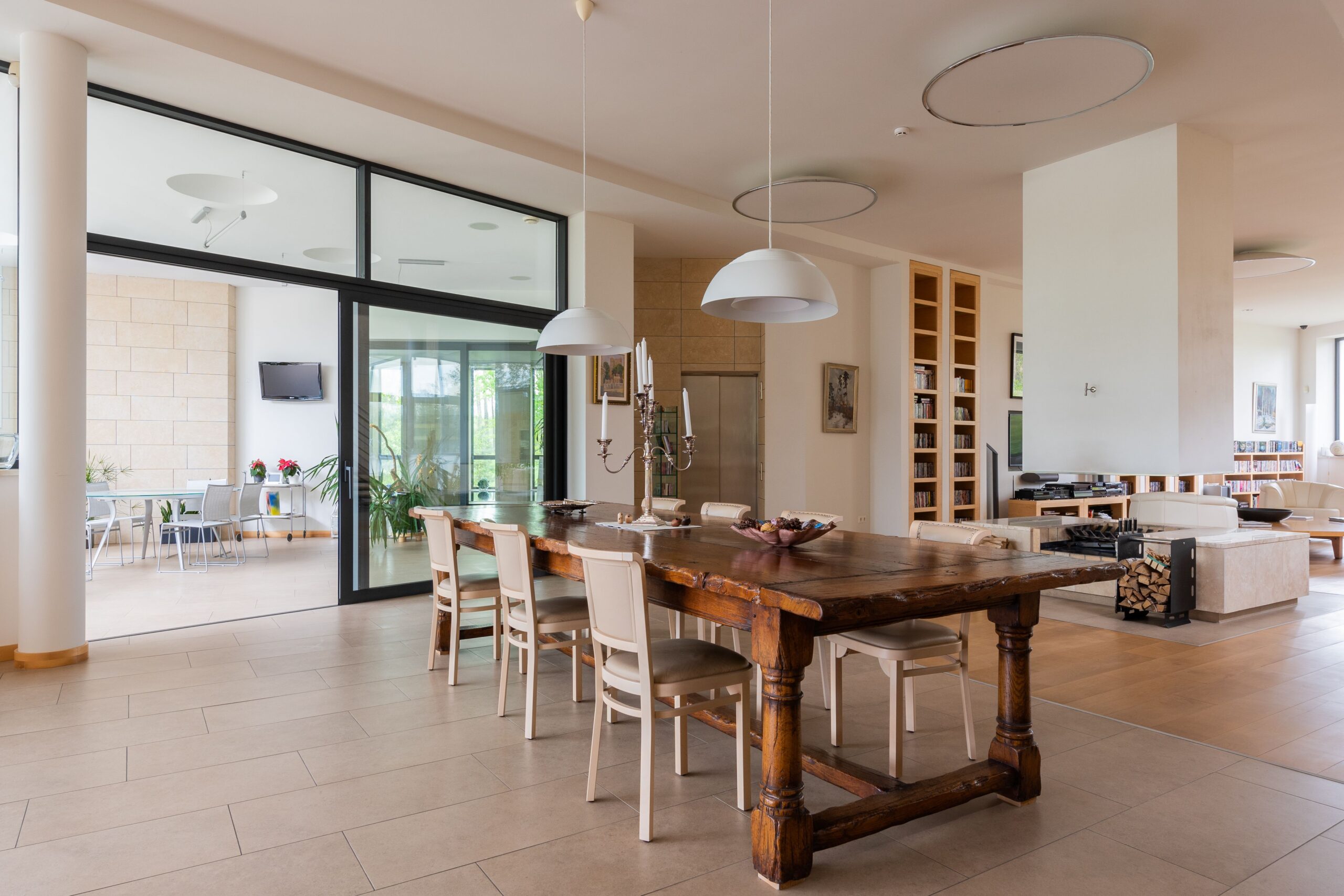
You know the feeling. You walk into one room and something in you settles — shoulders drop, breathing slows a little. Walk into another room in the exact same house, and without being able to say why, you just want to leave. Nothing “happened.” No one told you how to feel. Your mind decided before your brain got a vote.
That’s not random, and it’s not only about the sofa or the paint color. Long before you can put it into words, your nervous system is reading a room: the light, the temperature, the sound, how the furniture sits, whether there’s a clear line to the door, how close the ceiling feels above you. Researchers call this kind of instant, wordless read a “pre-cognitive appraisal” — a formal way of saying you feel a space before you think about it.
The artist Maya Lin — best known for the Vietnam Veterans Memorial, among other work that turns physical space into emotional experience — has described her own work in almost exactly these terms:
“My work originates from a simple desire to make people aware of their surroundings, not just the physical world but also the psychological world we live in.”
— Maya Lin, Boundaries (Simon & Schuster, 2000)
That’s the physical world and the psychological world, working on you at the same time, whether or not you’ve ever stopped to separate the two.
Here’s the part most of us never get to test: which specific thing is actually doing this to you? Is it the north-facing window that never quite warms up? The doorway that puts your back to the room when you sit on the couch? A ceiling height that makes sound bounce a little oddly? Most people live with these effects for years without isolating the cause. You just end up with a vague sense that “the bedroom feels off” or “I always work from the kitchen table, never my desk” — and it stays a hunch, because there’s never been an easy way to check.
That’s the gap we’re building Aorah to close. Instead of guessing, you get an actual aura map of your own home — room by room — from a scan you do yourself, on your phone, in a few minutes. No consultant, no waiting around, no cost. You get to see, laid out clearly, the underlying forces that influences how each room makes you feel.
We’re not here to tell you a room is “good” or “bad.” That’s never really been the point. The point is noticing — with real information instead of a vague hunch — what’s quietly running the show in your own home, every day, whether you’ve clocked it or not.


More Blogs
View more blogs
Read more latest articles
Renovating Together
How family and community input can raise your home energy score Renovation decisions rarely happen in a vacuum,...
VIEW MORE
Room by Room
How your home gets mapped, scored, and understood Most of us think about our homes as a single...
VIEW MORE
Turning a Feeling Into a Framework
How we measure the immeasurable in your home “You can’t measure a feeling” is one of those things...
VIEW MORE